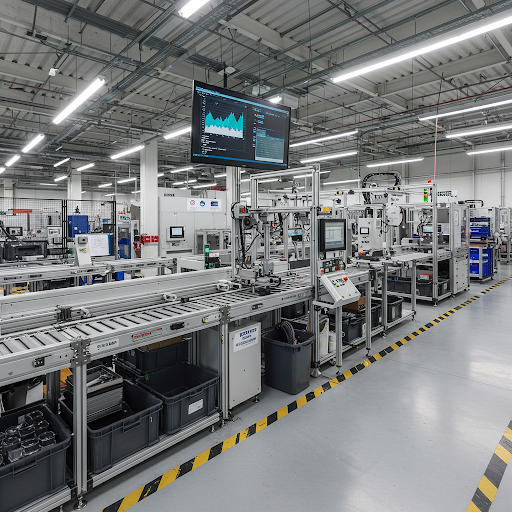
Lean production line design is a methodology which can be applied to various industries to streamline operations, reduce waste, and improve overall efficiency. It focuses on optimizing the flow of materials and resources through the production process. Here’s where you can use lean production line design and the advantages it brings:
Manufacturing:
Automotive Manufacturing: Lean principles are widely used in the automotive industry (e.g., Toyota Production System, Bosch Production System) to streamline assembly lines, improve production efficiency, reduce inventory, and increase product quality.
Electronics: In electronics manufacturing, lean production line design helps in managing complex production processes, reducing lead times, streamline the assembly of components, reduce cycle time, and minimize defects.
Consumer Goods: Companies producing products like furniture, clothing, or food can use lean production design to enhance efficiency, and ensure faster, more cost-efficient production cycles.
Healthcare:
Hospital Operations: Lean design can be applied to hospital and clinic operations, particularly in the management of patient flow, equipment usage, and the coordination of various healthcare teams to reduce waiting time and improve service delivery.
Pharmaceuticals: Lean production line design helps pharmaceutical companies streamline production, ensure high product quality, and adhere to regulatory standards while minimizing waste in manufacturing and packaging processes.
Food and Beverage Industry:
Processing Plants: Lean design can help in optimizing the production process, reducing waste, and ensuring food safety.
Packaging: Efficient packaging lines can be designed using lean principles to minimize material waste and improve speed.
Aerospace and Defense:
Aircraft manufacturing can benefit from lean production line design by improving part assembly, reducing production times, and enhancing collaboration among teams, ensuring on-time delivery.
Textile and Apparel:
Lean design in apparel manufacturing helps optimize workflows for cutting, stitching, and packaging, reducing fabric waste and improving labor efficiency.

Construction:
Lean principles can be used in prefabrication and modular construction, helping streamline processes and reduce material wastage in the production of components offsite.
Retail (Warehouse Operations):
Distribution Centers: Lean principles can optimize warehouse operations, reducing handling times and improving order accuracy.
Store Operations: Streamlining in-store processes can enhance customer experience and reduce operational costs.
Benefits of Lean Production Line Design to Business:
Cost Reduction:
Reduced Waste: Lean focuses on eliminating all forms of waste (e.g., overproduction, waiting, defects, excess inventory, unnecessary transportation), which directly reduces operational costs.
Lower Inventory Costs: By using just-in-time (JIT) systems, businesses can minimize excess inventory, reducing storage costs and freeing up cash flow.
Increased Efficiency:
Optimized Workflow: Lean production lines are designed for smooth and continuous flow, reducing bottlenecks and ensuring that each step of the process contributes to overall efficiency.
Faster Production Cycles: By reducing waste, businesses can shorten production times, enabling faster response to market demand and quicker time-to-market for products.
Lean production line design is a methodology which can be applied to various industries to streamline operations, reduce waste, and improve overall efficiency. It focuses on optimizing the flow of materials and resources through the production process. Here’s where you can use lean production line design and the
advantages it brings:
Manufacturing:
Automotive Manufacturing: Lean principles are widely used in the automotive industry (e.g., Toyota Production System, Bosch Production System) to streamline assembly lines, improve production efficiency, reduce inventory, and increase product quality.
Electronics: In electronics manufacturing, lean production line design helps in managing complex production processes, reducing lead times, streamline the assembly of components, reduce cycle time, and minimize defects.
Consumer Goods: Companies producing products like furniture, clothing, or food can use lean production design to enhance efficiency, and ensure faster, more cost-efficient production cycles.
Healthcare:
Hospital Operations: Lean design can be applied to hospital and clinic operations, particularly in the management of patient flow, equipment usage, and the coordination of various healthcare teams to reduce waiting time and improve service delivery.
Pharmaceuticals: Lean production line design helps pharmaceutical companies streamline production, ensure high product quality, and adhere to regulatory standards while minimizing waste in manufacturing and packaging processes.
Food and Beverage Industry:
Processing Plants: Lean design can help in optimizing the production process, reducing waste, and ensuring food safety.
Packaging: Efficient packaging lines can be designed using lean principles to minimize material waste and improve speed.
Aerospace and Defense:
Aircraft manufacturing can benefit from lean production line design by improving part assembly, reducing production times, and enhancing collaboration among teams, ensuring on-time delivery.
Textile and Apparel:
Lean design in apparel manufacturing helps optimize workflows for cutting, stitching, and packaging, reducing fabric waste and improving labor efficiency.
Construction:
Lean principles can be used in prefabrication and modular construction, helping streamline processes and reduce material wastage in the production of components offsite.
Retail (Warehouse Operations):
Distribution Centers: Lean principles can optimize warehouse operations, reducing handling times and improving order accuracy.
Store Operations: Streamlining in-store processes can enhance customer experience and reduce operational costs.
Benefits of Lean Production Line Design to Business:
Cost Reduction:
Reduced Waste: Lean focuses on eliminating all forms of waste (e.g., overproduction, waiting, defects, excess inventory, unnecessary transportation), which directly reduces operational costs.
Lower Inventory Costs: By using just-in-time (JIT) systems, businesses can minimize excess inventory, reducing storage costs and freeing up cash flow.
Increased Efficiency:
Optimized Workflow: Lean production lines are designed for smooth and continuous flow, reducing bottlenecks and ensuring that each step of the process contributes to overall efficiency.
Faster Production Cycles: By reducing waste, businesses can shorten production times, enabling faster response to market demand and quicker time-to-market for products.

Improved Quality:
Reduced Defects: Lean focuses on minimizing defects through techniques like Total Quality Management (TQM) and standardized work processes, resulting in higher product quality and fewer returns.
Continuous Improvement (Kaizen): The culture of continuous improvement encourages workers to consistently identify and resolve issues that impact quality.
Faster Time-to-Market:
Optimized production lines can reduce lead times, enabling businesses to bring products to market more quickly.
Enhanced Flexibility:
Adaptability to Demand Changes: Lean production lines can quickly adapt to shifts in demand, enabling businesses to adjust production volumes without significant disruptions.
Customization: It allows for customization in products without sacrificing efficiency, especially in industries where customer specifications matter (e.g., automotive or electronics).
Better Resource Utilization:
Lean design ensures that resources (materials, labor, and equipment) are used more effectively, reducing idle time and improving productivity.
Employee Engagement:
Empowered Workforce: Employees are encouraged to identify inefficiencies and propose improvements, fostering a culture of teamwork and accountability.
Enhanced Safety and Work Environment: Lean designs often include ergonomic improvements and safety measures, reducing workplace injuries and enhancing employee satisfaction.
Enhanced Customer Satisfaction:
On-Time Delivery: With improved production scheduling and inventory management, lean production ensures that products are delivered to customers on time.
Consistent Quality: By focusing on reducing defects and improving product consistency, businesses can maintain a high level of customer satisfaction and loyalty.
Improved Supplier Relationships:
Better Coordination: Lean production lines often involve closer collaboration with suppliers to ensure materials arrive when needed, creating a more responsive and efficient supply chain.
Quality Control: Suppliers are encouraged to meet high standards of quality, ensuring that the final product meets customer expectations.
Scalability:
Lean principles can be scaled to meet growing production demands. Businesses can easily implement lean methodologies across multiple production lines or plants, ensuring consistent improvements across the organization.
Sustainability:
By reducing waste and improving resource efficiency, lean production lines contribute to more sustainable business practices.
Competitive Advantage:
Businesses that implement lean production line design can achieve lower costs, higher quality, and faster delivery times, giving them a competitive edge in the market.
Lean production line design is a powerful approach that can be applied across various industries to drive efficiency, reduce costs, and improve quality. By focusing on eliminating waste and continuously improving processes, businesses can achieve significant operational benefits and enhance their competitiveness. Successful implementation requires a commitment to lean principles, employee involvement, and a culture of continuous improvement.

Improved Quality:
Reduced Defects: Lean focuses on minimizing defects through techniques like Total Quality Management (TQM) and standardized work processes, resulting in higher product quality and fewer returns.
Continuous Improvement (Kaizen): The culture of continuous improvement encourages workers to consistently identify and resolve issues that impact quality.
Faster Time-to-Market:
Optimized production lines can reduce lead times, enabling businesses to bring products to market more quickly.
Enhanced Flexibility:
Adaptability to Demand Changes: Lean production lines can quickly adapt to shifts in demand, enabling businesses to adjust production volumes without significant disruptions.
Customization: It allows for customization in products without sacrificing efficiency, especially in industries where customer specifications matter (e.g., automotive or electronics).
Better Resource Utilization:
Lean design ensures that resources (materials, labor, and equipment) are used more effectively, reducing idle time and improving productivity.
Employee Engagement:
Empowered Workforce: Employees are encouraged to identify inefficiencies and propose improvements, fostering a culture of teamwork and accountability.
Enhanced Safety and Work Environment: Lean designs often include ergonomic improvements and safety measures, reducing workplace injuries and enhancing employee satisfaction.
Enhanced Customer Satisfaction:
On-Time Delivery: With improved production scheduling and inventory management, lean production ensures that products are delivered to customers on time.
Consistent Quality: By focusing on reducing defects and improving product consistency, businesses can maintain a high level of customer satisfaction and loyalty.
Improved Supplier Relationships:
Better Coordination: Lean production lines often involve closer collaboration with suppliers to ensure materials arrive when needed, creating a more responsive and efficient supply chain.
Quality Control: Suppliers are encouraged to meet high standards of quality, ensuring that the final product meets customer expectations.
Scalability:
Lean principles can be scaled to meet growing production demands. Businesses can easily implement lean methodologies across multiple production lines or plants, ensuring consistent improvements across the organization.
Sustainability:
By reducing waste and improving resource efficiency, lean production lines contribute to more sustainable business practices.
Competitive Advantage:
Businesses that implement lean production line design can achieve lower costs, higher quality, and faster delivery times, giving them a competitive edge in the market.
Lean production line design is a powerful approach that can be applied across various industries to drive efficiency, reduce costs, and improve quality. By focusing on eliminating waste and continuously improving processes, businesses can achieve significant operational benefits and enhance their competitiveness. Successful implementation requires a commitment to lean principles, employee involvement, and a culture of continuous improvement.
Lean production line design is a methodology which can be applied to various industries to streamline operations, reduce waste, and improve overall efficiency. It focuses on optimizing the flow of materials and resources through the production process. Here’s where you can use lean production line design and the advantages it brings:
Manufacturing:
Automotive Manufacturing: Lean principles are widely used in the automotive industry (e.g., Toyota Production System, Bosch Production System) to streamline assembly lines, improve production efficiency, reduce inventory, and increase product quality.
Electronics: In electronics manufacturing, lean production line design helps in managing complex production processes, reducing lead times, streamline the assembly of components, reduce cycle time, and minimize defects.
Consumer Goods: Companies producing products like furniture, clothing, or food can use lean production design to enhance efficiency, and ensure faster, more cost-efficient production cycles.
Healthcare:
Hospital Operations: Lean design can be applied to hospital and clinic operations, particularly in the management of patient flow, equipment usage, and the coordination of various healthcare teams to reduce waiting time and improve service delivery.
Pharmaceuticals: Lean production line design helps pharmaceutical companies streamline production, ensure high product quality, and adhere to regulatory standards while minimizing waste in manufacturing and packaging processes.
Food and Beverage Industry:
Processing Plants: Lean design can help in optimizing the production process, reducing waste, and ensuring food safety.
Packaging: Efficient packaging lines can be designed using lean principles to minimize material waste and improve speed.
Aerospace and Defense:
Aircraft manufacturing can benefit from lean production line design by improving part assembly, reducing production times, and enhancing collaboration among teams, ensuring on-time delivery.
Textile and Apparel:
Lean design in apparel manufacturing helps optimize workflows for cutting, stitching, and packaging, reducing fabric waste and improving labor efficiency.
Construction:
Lean principles can be used in prefabrication and modular construction, helping streamline processes and reduce material wastage in the production of components offsite.
Retail (Warehouse Operations):
Distribution Centers: Lean principles can optimize warehouse operations, reducing handling times and improving order accuracy.
Store Operations: Streamlining in-store processes can enhance customer experience and reduce operational costs.
Benefits of Lean Production Line Design to Business:
Cost Reduction:
Reduced Waste: Lean focuses on eliminating all forms of waste (e.g., overproduction, waiting, defects, excess inventory, unnecessary transportation), which directly reduces operational costs.
Lower Inventory Costs: By using just-in-time (JIT) systems, businesses can minimize excess inventory, reducing storage costs and freeing up cash flow.
Increased Efficiency:
Optimized Workflow: Lean production lines are designed for smooth and continuous flow, reducing bottlenecks and ensuring that each step of the process contributes to overall efficiency.
Faster Production Cycles: By reducing waste, businesses can shorten production times, enabling faster response to market demand and quicker time-to-market for products.
Lean production line design is a methodology which can be applied to various industries to streamline operations, reduce waste, and improve overall efficiency. It focuses on optimizing the flow of materials and resources through the production process. Here’s where you can use lean production line design and the
advantages it brings:
Manufacturing:
Automotive Manufacturing: Lean principles are widely used in the automotive industry (e.g., Toyota Production System, Bosch Production System) to streamline assembly lines, improve production efficiency, reduce inventory, and increase product quality.
Electronics: In electronics manufacturing, lean production line design helps in managing complex production processes, reducing lead times, streamline the assembly of components, reduce cycle time, and minimize defects.
Consumer Goods: Companies producing products like furniture, clothing, or food can use lean production design to enhance efficiency, and ensure faster, more cost-efficient production cycles.
Healthcare:
Hospital Operations: Lean design can be applied to hospital and clinic operations, particularly in the management of patient flow, equipment usage, and the coordination of various healthcare teams to reduce waiting time and improve service delivery.
Pharmaceuticals: Lean production line design helps pharmaceutical companies streamline production, ensure high product quality, and adhere to regulatory standards while minimizing waste in manufacturing and packaging processes.
Food and Beverage Industry:
Processing Plants: Lean design can help in optimizing the production process, reducing waste, and ensuring food safety.
Packaging: Efficient packaging lines can be designed using lean principles to minimize material waste and improve speed.
Aerospace and Defense:
Aircraft manufacturing can benefit from lean production line design by improving part assembly, reducing production times, and enhancing collaboration among teams, ensuring on-time delivery.
Textile and Apparel:
Lean design in apparel manufacturing helps optimize workflows for cutting, stitching, and packaging, reducing fabric waste and improving labor efficiency.
Construction:
Lean principles can be used in prefabrication and modular construction, helping streamline processes and reduce material wastage in the production of components offsite.
Retail (Warehouse Operations):
Distribution Centers: Lean principles can optimize warehouse operations, reducing handling times and improving order accuracy.
Store Operations: Streamlining in-store processes can enhance customer experience and reduce operational costs.
Benefits of Lean Production Line Design to Business:
Cost Reduction:
Reduced Waste: Lean focuses on eliminating all forms of waste (e.g., overproduction, waiting, defects, excess inventory, unnecessary transportation), which directly reduces operational costs.
Lower Inventory Costs: By using just-in-time (JIT) systems, businesses can minimize excess inventory, reducing storage costs and freeing up cash flow.
Increased Efficiency:
Optimized Workflow: Lean production lines are designed for smooth and continuous flow, reducing bottlenecks and ensuring that each step of the process contributes to overall efficiency.
Faster Production Cycles: By reducing waste, businesses can shorten production times, enabling faster response to market demand and quicker time-to-market for products.
Improved Quality:
Reduced Defects: Lean focuses on minimizing defects through techniques like Total Quality Management (TQM) and standardized work processes, resulting in higher product quality and fewer returns.
Continuous Improvement (Kaizen): The culture of continuous improvement encourages workers to consistently identify and resolve issues that impact quality.
Faster Time-to-Market:
Optimized production lines can reduce lead times, enabling businesses to bring products to market more quickly.
Enhanced Flexibility:
Adaptability to Demand Changes: Lean production lines can quickly adapt to shifts in demand, enabling businesses to adjust production volumes without significant disruptions.
Customization: It allows for customization in products without sacrificing efficiency, especially in industries where customer specifications matter (e.g., automotive or electronics).
Better Resource Utilization:
Lean design ensures that resources (materials, labor, and equipment) are used more effectively, reducing idle time and improving productivity.
Employee Engagement:
Empowered Workforce: Employees are encouraged to identify inefficiencies and propose improvements, fostering a culture of teamwork and accountability.
Enhanced Safety and Work Environment: Lean designs often include ergonomic improvements and safety measures, reducing workplace injuries and enhancing employee satisfaction.
Enhanced Customer Satisfaction:
On-Time Delivery: With improved production scheduling and inventory management, lean production ensures that products are delivered to customers on time.
Consistent Quality: By focusing on reducing defects and improving product consistency, businesses can maintain a high level of customer satisfaction and loyalty.
Improved Supplier Relationships:
Better Coordination: Lean production lines often involve closer collaboration with suppliers to ensure materials arrive when needed, creating a more responsive and efficient supply chain.
Quality Control: Suppliers are encouraged to meet high standards of quality, ensuring that the final product meets customer expectations.
Scalability:
Lean principles can be scaled to meet growing production demands. Businesses can easily implement lean methodologies across multiple production lines or plants, ensuring consistent improvements across the organization.
Sustainability:
By reducing waste and improving resource efficiency, lean production lines contribute to more sustainable business practices.
Competitive Advantage:
Businesses that implement lean production line design can achieve lower costs, higher quality, and faster delivery times, giving them a competitive edge in the market.
Lean production line design is a powerful approach that can be applied across various industries to drive efficiency, reduce costs, and improve quality. By focusing on eliminating waste and continuously improving processes, businesses can achieve significant operational benefits and enhance their competitiveness. Successful implementation requires a commitment to lean principles, employee involvement, and a culture of continuous improvement.
Improved Quality:
Reduced Defects: Lean focuses on minimizing defects through techniques like Total Quality Management (TQM) and standardized work processes, resulting in higher product quality and fewer returns.
Continuous Improvement (Kaizen): The culture of continuous improvement encourages workers to consistently identify and resolve issues that impact quality.
Faster Time-to-Market:
Optimized production lines can reduce lead times, enabling businesses to bring products to market more quickly.
Enhanced Flexibility:
Adaptability to Demand Changes: Lean production lines can quickly adapt to shifts in demand, enabling businesses to adjust production volumes without significant disruptions.
Customization: It allows for customization in products without sacrificing efficiency, especially in industries where customer specifications matter (e.g., automotive or electronics).
Better Resource Utilization:
Lean design ensures that resources (materials, labor, and equipment) are used more effectively, reducing idle time and improving productivity.
Employee Engagement:
Empowered Workforce: Employees are encouraged to identify inefficiencies and propose improvements, fostering a culture of teamwork and accountability.
Enhanced Safety and Work Environment: Lean designs often include ergonomic improvements and safety measures, reducing workplace injuries and enhancing employee satisfaction.
Enhanced Customer Satisfaction:
On-Time Delivery: With improved production scheduling and inventory management, lean production ensures that products are delivered to customers on time.
Consistent Quality: By focusing on reducing defects and improving product consistency, businesses can maintain a high level of customer satisfaction and loyalty.
Improved Supplier Relationships:
Better Coordination: Lean production lines often involve closer collaboration with suppliers to ensure materials arrive when needed, creating a more responsive and efficient supply chain.
Quality Control: Suppliers are encouraged to meet high standards of quality, ensuring that the final product meets customer expectations.
Scalability:
Lean principles can be scaled to meet growing production demands. Businesses can easily implement lean methodologies across multiple production lines or plants, ensuring consistent improvements across the organization.
Sustainability:
By reducing waste and improving resource efficiency, lean production lines contribute to more sustainable business practices.
Competitive Advantage:
Businesses that implement lean production line design can achieve lower costs, higher quality, and faster delivery times, giving them a competitive edge in the market.
Lean production line design is a powerful approach that can be applied across various industries to drive efficiency, reduce costs, and improve quality. By focusing on eliminating waste and continuously improving processes, businesses can achieve significant operational benefits and enhance their competitiveness. Successful implementation requires a commitment to lean principles, employee involvement, and a culture of continuous improvement.
[ Retract  ]
]