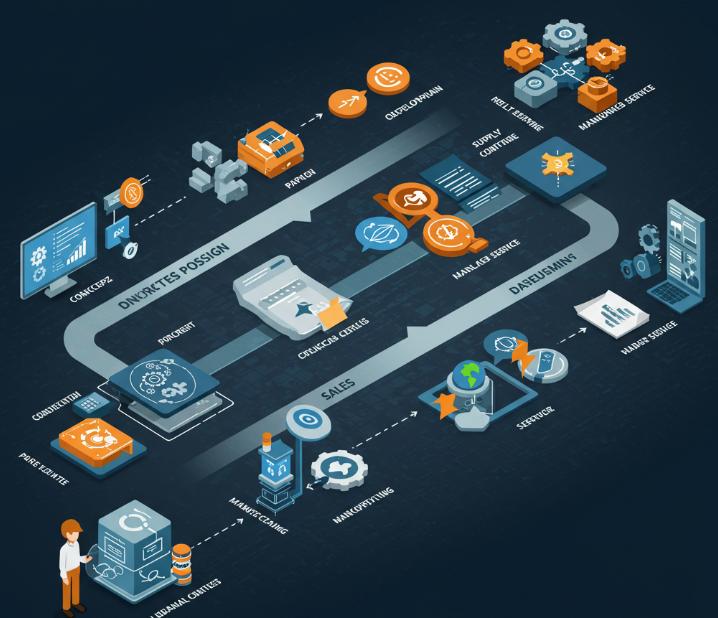
Product Lifecycle Management (PLM) is a strategic approach to managing the entire lifecycle of a product, from its initial concept and design to its eventual retirement and disposal. PLM systems help organizations manage product data, processes, and resources, improving collaboration, efficiency, and decision-making throughout the product's lifecycle.
Here’s a comprehensive list of services you can request on this platform related to Product Lifecycle Management (PLM):
1. PLM Consultation & Strategy Development
Needs Assessment & Gap Analysis: Conducting a thorough assessment of the client’s product development processes to identify gaps, inefficiencies, and opportunities for improvement.
PLM Strategy Development: Helping organizations develop a tailored PLM strategy that aligns with their business goals, industry needs, and digital transformation objectives.
Roadmap Creation: Developing a clear roadmap for PLM implementation, including timelines, milestones, and resource allocation for a successful PLM adoption.
PLM System Selection: Assisting in selecting the right PLM software or platform (e.g., Dassault Systems, Siemens Teamcenter, PTC Windchill, Autodesk Fusion Lifecycle) based on the client’s industry, size, and requirements.
Change Management: Advising on effective change management strategies to ensure smooth adoption of PLM systems across the organization, focusing on stakeholder buy-in and overcoming resistance to change.
2. PLM Implementation & Integration
System Installation & Setup: Installing and configuring the chosen PLM platform and aligning it with existing IT infrastructure, ensuring seamless integration.
Integration with Other Systems: Integrating PLM with other enterprise systems such as ERP (Enterprise Resource Planning), CAD (Computer-Aided Design), SCM (Supply Chain Management), and CRM (Customer Relationship Management) for unified data flow and process management.
Customization & Configuration: Customizing PLM software to meet the specific needs of the business, including workflow design, data templates, and reporting tools.
Data Migration & Import: Migrating existing product data, designs, BOMs (Bills of Materials), and documents from legacy systems into the new PLM system, ensuring data integrity and accessibility.
Testing & Quality Assurance: Conducting thorough system testing to ensure the PLM system works as expected, identifying and resolving any issues before going live.
3. PLM Process Optimization & Workflow Design
Workflow Design & Automation: Designing and automating product development workflows (e.g., design, prototyping, testing, manufacturing, and maintenance) to improve efficiency and collaboration.
Process Mapping & Optimization: Mapping current product development processes, identifying bottlenecks, and optimizing them using the capabilities of the PLM system.
Collaboration & Communication Tools: Setting up tools within the PLM system that promote cross-functional collaboration, such as document sharing, version control, and real-time communication.
Product Data Management (PDM) Optimization: Streamlining the management of product data (e.g., CAD models, documents, specifications) to improve accessibility, traceability, and version control.
4. PLM System Customization & Development
Custom Feature Development: Developing custom features or modules to extend the functionality of the PLM system, such as specialized product reporting, additional analytics tools, or integrations with third-party applications.
User Interface (UI) Customization: Tailoring the PLM user interface to make it more intuitive for different user roles (e.g., designers, engineers, suppliers, project managers).
Advanced Configuration: Configuring complex product configurations, multi-site setups, and managing the lifecycle of various product variants within the PLM system.
5. PLM Data Management & Maintenance
Data Governance & Compliance: Implementing data governance frameworks within the PLM system to ensure data consistency, accuracy, and compliance with industry standards (e.g., ISO, FDA, GDPR).
Document Management: Establishing document management protocols to control versioning, approvals, and access rights for product-related documents (e.g., specifications, drawings, certifications).
Product Data Integration: Enabling seamless integration between product data (designs, materials, configurations) and other business systems to improve data accuracy across the organization.
Maintenance of Product Lifecycle Data: Ongoing maintenance of product lifecycle data, ensuring it is up-to-date, accurate, and relevant to all stakeholders, including suppliers, manufacturers, and service teams.
6. PLM Training & Knowledge Transfer
User Training Programs: Providing training for various users (e.g., engineers, product managers, designers) on how to use the PLM system effectively, covering topics such as product data management, workflow navigation, and collaboration tools.
Administrator Training: Offering in-depth training for system administrators and power users on the setup, configuration, and management of the PLM system.
End-User Support: Providing ongoing support to help users troubleshoot issues, optimize workflows, and leverage the full potential of the PLM system.
Documentation & Knowledge Base: Creating comprehensive documentation and knowledge base resources for users, including best practices, FAQs, and troubleshooting guides.
7. PLM System Support & Maintenance
Ongoing Technical Support: Providing technical support services to resolve any PLM system-related issues, ensuring minimal downtime and continuity in product development.
System Updates & Upgrades: Managing regular system updates, patching, and version upgrades to keep the PLM system current, secure, and optimized for performance.
System Monitoring & Troubleshooting: Continuously monitoring the performance of the PLM system to identify and resolve any issues proactively.
Backup & Disaster Recovery: Implementing regular data backups and disaster recovery plans to protect critical product lifecycle data.
8. PLM Analytics & Reporting
Custom Reports & Dashboards: Developing custom reports and dashboards for tracking key metrics, such as project progress, design changes, product costs, and compliance status.
Product Performance Analytics: Analyzing product performance data from different stages of the product lifecycle to identify improvement areas and optimize design or manufacturing processes.
Real-Time Data Analytics: Enabling real-time analytics for monitoring product development processes, decision-making, and KPI tracking across teams.
Predictive Analytics: Implementing predictive analytics tools within the PLM system to forecast potential risks or delays in the product lifecycle, such as production issues or supply chain disruptions.
9. PLM Integration with Industry 4.0 Technologies
IoT Integration: Integrating IoT data from connected devices and machines into the PLM system to enable real-time monitoring of product performance and condition during production and usage.
CAD/CAE Integration: Integrating Computer-Aided Design (CAD) and Computer-Aided Engineering (CAE) tools with the PLM system for seamless collaboration between design, engineering, and manufacturing teams.
ERP & Supply Chain Integration: Integrating PLM with ERP and supply chain management systems to enable end-to-end visibility and control over product development, production, and distribution.
Manufacturing Execution System (MES) Integration: Integrating PLM with MES for synchronized tracking of production data, product quality, and manufacturing progress.
10. Sustainability & Circular Economy Integration
Sustainable Product Design: Helping businesses integrate sustainability considerations into product design, including material selection, energy usage, and recyclability, using PLM tools.
Circular Economy Practices: Assisting clients in adopting circular economy principles by managing product end-of-life processes, recycling, and remanufacturing through the PLM system.
Sustainability Reporting: Creating reporting mechanisms within the PLM system to track sustainability metrics, such as carbon footprint, material usage, and waste reduction.
11. PLM Scalability & Cloud Migration
Cloud-Based PLM Solutions: Assisting with the migration of on-premises PLM systems to cloud-based solutions, enabling improved scalability, accessibility, and collaboration.
PLM Scalability Planning: Helping organizations scale their PLM systems as they grow, managing additional product lines, locations, and teams without compromising performance.
Multi-Site PLM Management: Setting up and managing multi-site PLM solutions for organizations with global operations, ensuring consistency and collaboration across teams in different regions.
12. End-of-Life Product Management
Product Obsolescence Management: Helping clients manage products that are nearing the end of their lifecycle, including strategies for phasing out products, transitioning to new versions, and handling legacy product support.
Product End-of-Life (EOL) Processes: Designing and implementing EOL processes within the PLM system, including phase-out planning, supplier management, and customer communication.
13. PLM Compliance & Regulatory Management
Regulatory Compliance Integration: Assisting with the integration of regulatory compliance management into the PLM system, including industry-specific standards like ISO, FDA, and CE marking.
Document Control & Auditing: Ensuring that all product development documentation complies with regulatory standards and maintaining an auditable trail of changes and approvals.
Product Lifecycle Management (PLM) is a strategic approach to managing the entire lifecycle of a product, from its initial concept and design to its eventual retirement and disposal. PLM systems help organizations manage product data, processes, and resources, improving collaboration, efficiency, and decision-making throughout the product's lifecycle.
Here’s a comprehensive list of services you can request on this platform related to Product Lifecycle Management (PLM):
1. PLM Consultation & Strategy Development
Needs Assessment & Gap Analysis: Conducting a thorough assessment of the client’s product development processes to identify gaps, inefficiencies, and opportunities for improvement.
PLM Strategy Development: Helping organizations develop a tailored PLM strategy that aligns with their business goals, industry needs, and digital transformation objectives.
Roadmap Creation: Developing a clear roadmap for PLM implementation, including timelines, milestones, and resource allocation for a successful PLM adoption.
PLM System Selection: Assisting in selecting the right PLM software or platform (e.g., Dassault Systems, Siemens Teamcenter, PTC Windchill, Autodesk Fusion Lifecycle) based on the client’s industry, size, and requirements.
Change Management: Advising on effective change management strategies to ensure smooth adoption of PLM systems across the organization, focusing on stakeholder buy-in and overcoming resistance to change.
2. PLM Implementation & Integration
System Installation & Setup: Installing and configuring the chosen PLM platform and aligning it with existing IT infrastructure, ensuring seamless integration.
Integration with Other Systems: Integrating PLM with other enterprise systems such as ERP (Enterprise Resource Planning), CAD (Computer-Aided Design), SCM (Supply Chain Management), and CRM (Customer Relationship Management) for unified data flow and process management.
Customization & Configuration: Customizing PLM software to meet the specific needs of the business, including workflow design, data templates, and reporting tools.
Data Migration & Import: Migrating existing product data, designs, BOMs (Bills of Materials), and documents from legacy systems into the new PLM system, ensuring data integrity and accessibility.
Testing & Quality Assurance: Conducting thorough system testing to ensure the PLM system works as expected, identifying and resolving any issues before going live.
3. PLM Process Optimization & Workflow Design
Workflow Design & Automation: Designing and automating product development workflows (e.g., design, prototyping, testing, manufacturing, and maintenance) to improve efficiency and collaboration.
Process Mapping & Optimization: Mapping current product development processes, identifying bottlenecks, and optimizing them using the capabilities of the PLM system.
Collaboration & Communication Tools: Setting up tools within the PLM system that promote cross-functional collaboration, such as document sharing, version control, and real-time communication.
Product Data Management (PDM) Optimization: Streamlining the management of product data (e.g., CAD models, documents, specifications) to improve accessibility, traceability, and version control.
4. PLM System Customization & Development
Custom Feature Development: Developing custom features or modules to extend the functionality of the PLM system, such as specialized product reporting, additional analytics tools, or integrations with third-party applications.
User Interface (UI) Customization: Tailoring the PLM user interface to make it more intuitive for different user roles (e.g., designers, engineers, suppliers, project managers).
Advanced Configuration: Configuring complex product configurations, multi-site setups, and managing the lifecycle of various product variants within the PLM system.
5. PLM Data Management & Maintenance
Data Governance & Compliance: Implementing data governance frameworks within the PLM system to ensure data consistency, accuracy, and compliance with industry standards (e.g., ISO, FDA, GDPR).
Document Management: Establishing document management protocols to control versioning, approvals, and access rights for product-related documents (e.g., specifications, drawings, certifications).
Product Data Integration: Enabling seamless integration between product data (designs, materials, configurations) and other business systems to improve data accuracy across the organization.
Maintenance of Product Lifecycle Data: Ongoing maintenance of product lifecycle data, ensuring it is up-to-date, accurate, and relevant to all stakeholders, including suppliers, manufacturers, and service teams.
6. PLM Training & Knowledge Transfer
User Training Programs: Providing training for various users (e.g., engineers, product managers, designers) on how to use the PLM system effectively, covering topics such as product data management, workflow navigation, and collaboration tools.
Administrator Training: Offering in-depth training for system administrators and power users on the setup, configuration, and management of the PLM system.
End-User Support: Providing ongoing support to help users troubleshoot issues, optimize workflows, and leverage the full potential of the PLM system.
Documentation & Knowledge Base: Creating comprehensive documentation and knowledge base resources for users, including best practices, FAQs, and troubleshooting guides.
7. PLM System Support & Maintenance
Ongoing Technical Support: Providing technical support services to resolve any PLM system-related issues, ensuring minimal downtime and continuity in product development.
System Updates & Upgrades: Managing regular system updates, patching, and version upgrades to keep the PLM system current, secure, and optimized for performance.
System Monitoring & Troubleshooting: Continuously monitoring the performance of the PLM system to identify and resolve any issues proactively.
Backup & Disaster Recovery: Implementing regular data backups and disaster recovery plans to protect critical product lifecycle data.
8. PLM Analytics & Reporting
Custom Reports & Dashboards: Developing custom reports and dashboards for tracking key metrics, such as project progress, design changes, product costs, and compliance status.
Product Performance Analytics: Analyzing product performance data from different stages of the product lifecycle to identify improvement areas and optimize design or manufacturing processes.
Real-Time Data Analytics: Enabling real-time analytics for monitoring product development processes, decision-making, and KPI tracking across teams.
Predictive Analytics: Implementing predictive analytics tools within the PLM system to forecast potential risks or delays in the product lifecycle, such as production issues or supply chain disruptions.
9. PLM Integration with Industry 4.0 Technologies
IoT Integration: Integrating IoT data from connected devices and machines into the PLM system to enable real-time monitoring of product performance and condition during production and usage.
CAD/CAE Integration: Integrating Computer-Aided Design (CAD) and Computer-Aided Engineering (CAE) tools with the PLM system for seamless collaboration between design, engineering, and manufacturing teams.
ERP & Supply Chain Integration: Integrating PLM with ERP and supply chain management systems to enable end-to-end visibility and control over product development, production, and distribution.
Manufacturing Execution System (MES) Integration: Integrating PLM with MES for synchronized tracking of production data, product quality, and manufacturing progress.
10. Sustainability & Circular Economy Integration
Sustainable Product Design: Helping businesses integrate sustainability considerations into product design, including material selection, energy usage, and recyclability, using PLM tools.
Circular Economy Practices: Assisting clients in adopting circular economy principles by managing product end-of-life processes, recycling, and remanufacturing through the PLM system.
Sustainability Reporting: Creating reporting mechanisms within the PLM system to track sustainability metrics, such as carbon footprint, material usage, and waste reduction.
11. PLM Scalability & Cloud Migration
Cloud-Based PLM Solutions: Assisting with the migration of on-premises PLM systems to cloud-based solutions, enabling improved scalability, accessibility, and collaboration.
PLM Scalability Planning: Helping organizations scale their PLM systems as they grow, managing additional product lines, locations, and teams without compromising performance.
Multi-Site PLM Management: Setting up and managing multi-site PLM solutions for organizations with global operations, ensuring consistency and collaboration across teams in different regions.
12. End-of-Life Product Management
Product Obsolescence Management: Helping clients manage products that are nearing the end of their lifecycle, including strategies for phasing out products, transitioning to new versions, and handling legacy product support.
Product End-of-Life (EOL) Processes: Designing and implementing EOL processes within the PLM system, including phase-out planning, supplier management, and customer communication.
13. PLM Compliance & Regulatory Management
Regulatory Compliance Integration: Assisting with the integration of regulatory compliance management into the PLM system, including industry-specific standards like ISO, FDA, and CE marking.
Document Control & Auditing: Ensuring that all product development documentation complies with regulatory standards and maintaining an auditable trail of changes and approvals.
[ Retract  ]
]