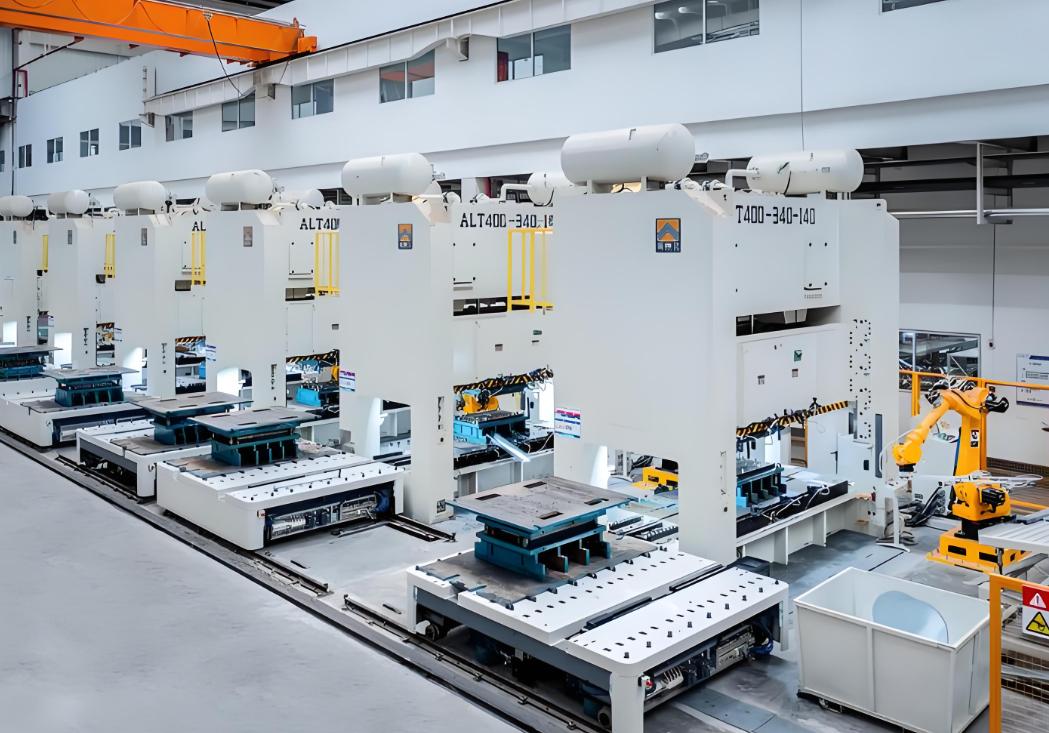
Metal stamping is a manufacturing process used to produce a wide range of parts and components by applying high pressure to metal sheets using dies and presses. It's commonly used in industries such as automotive, electronics, consumer goods, and appliances. Below are the various services you request about metal stamping:
1. Metal Stamping Design and Engineering Services
Custom Part Design: Offer design consultation to help customers create stamped parts tailored to their specific needs, including structural components, enclosures, and decorative pieces. Provide expertise in design for tooling, material selection, and part geometry.
Tooling Design: Provide services for designing custom stamping dies, including progressive dies, compound dies, and transfer dies, based on customer specifications. This also includes designing dies for high precision and complex part features.
Prototyping: Offer rapid prototyping services for customers to test designs and functionality with low-volume runs, ensuring the parts meet design specifications before proceeding to full production.
Feasibility Analysis: Conduct design analysis and simulations to evaluate whether a part design is feasible for stamping, ensuring it can be produced with the desired specifications without defects like wrinkles, burrs, or distortion.
2. Types of Metal Stamping Services
Progressive Die Stamping: Provide progressive die stamping services for parts that require multiple operations (e.g., bending, cutting, forming) in a single machine cycle. This is ideal for high-volume production and parts that need multiple features.
Compound Die Stamping: Offer compound die stamping services for parts requiring multiple operations, such as cutting and bending, within a single die set, ideal for medium-volume production and more complex parts.
Transfer Die Stamping: Provide transfer die stamping for parts that require multiple steps and involve moving the part from station to station within the die set. This is used for producing larger and more complex parts with higher material yield.
Deep Drawing: Offer deep drawing services for producing hollow or deep parts from sheet metal, such as automotive body panels or oil canisters, by stretching the metal into a die cavity.
Piercing and Blanking: Provide piercing (creating holes in the metal) and blanking (cutting out part blanks from larger sheets) services as standalone operations or as part of a larger stamping process.
Bending and Forming: Offer bending and forming services to shape metal sheets into the desired configurations. This can include V-bending, edge forming, and roll forming for creating curved, angled, or shaped metal parts.
3. Material Selection and Sourcing
Steel Stamping: Provide steel stamping services, including carbon steel, stainless steel, and galvanized steel for industries like automotive (e.g., brackets, exhaust systems) and construction (e.g., structural components).
Aluminum Stamping: Offer aluminum stamping for parts that need to be lightweight yet strong, commonly used in industries like aerospace, electronics, and automotive (e.g., auto body panels and electrical components).
Copper and Brass Stamping: Provide copper and brass stamping for parts requiring good electrical conductivity or corrosion resistance, such as electrical connectors, heat exchangers, and plumbing fittings.
Titanium Stamping: Offer titanium stamping services for high-performance applications, such as in aerospace and medical industries, where strength-to-weight ratio and corrosion resistance are critical.
Stainless Steel Stamping: Provide stainless steel stamping for producing corrosion-resistant parts used in medical, food processing, and consumer goods industries.
Brass and Bronze Stamping: Provide brass and bronze stamping for parts that require high strength, wear resistance, and thermal conductivity, commonly used in machinery and marine applications.
4. Metal Stamping Production Services
High-Volume Stamping: Offer high-volume stamping for mass production of parts with repeatable, consistent quality. Ideal for industries like automotive and electronics where parts need to be produced at a large scale.
Low-Volume Stamping: Provide low-volume stamping services for short-run or prototyping purposes, where fewer units are needed, such as for medical device components, consumer goods, or specialty products.
Precision Stamping: Specialize in precision stamping for parts that require tight tolerances and high accuracy, commonly used in industries like electronics, medical, and aerospace.
Complex Shape Stamping: Provide stamping for complex geometries, such as embossed or dimpled parts, often required in decorative applications or structural components.
Automated Metal Stamping: Offer automated stamping with high-efficiency presses, integrated robotics, and computerized systems to ensure consistent and high-quality parts with minimized human intervention.
5. Secondary Operations and Finishing Services
Deburring: Provide deburring services to remove sharp edges or excess material from stamped parts, ensuring smooth surfaces and enhanced safety for end-users.
Plating and Coating: Offer post-stamping services like galvanizing, zinc plating, powder coating, or anodizing to improve corrosion resistance and aesthetic appearance of stamped parts.
Surface Finishing: Provide services such as polishing, texturing, brushing, or painting to enhance the look and functionality of the stamped parts.
Heat Treating: Offer heat treating services to improve the mechanical properties of stamped parts, such as hardness, strength, and fatigue resistance, to meet the needs of specific industries.
Assembly: Provide part assembly services, where stamped components are assembled into larger parts or products, such as enclosures, brackets, and electrical components.
6. Quality Control and Testing Services
Dimensional Inspection: Provide dimensional inspection to ensure parts meet tolerances and specifications using tools like CMM (Coordinate Measuring Machines) and laser scanning.
Non-Destructive Testing (NDT): Offer NDT services to detect defects such as cracks, voids, and delaminations in the stamped parts without damaging them.
Material Testing: Conduct material testing to check properties such as tensile strength, hardness, ductility, and impact resistance to ensure parts meet the required standards.
Functional Testing: Provide functional testing to ensure the stamped parts perform correctly in their intended application, such as electrical conductivity testing or stress testing.
7. Stamping for Specific Industries
Automotive Stamping: Provide automotive metal stamping services for producing parts like brackets, fenders, bumpers, engine components, chassis parts, and body panels that require precision, durability, and cost-efficiency.
Electronics Stamping: Offer electronics metal stamping for parts like connectors, heat sinks, circuit board components, and battery terminals, ensuring excellent conductivity, safety, and performance.
Consumer Goods Stamping: Provide stamping services for consumer goods such as appliances, furniture, tools, and home décor, offering high-quality, durable parts.
Aerospace Stamping: Offer aerospace metal stamping for lightweight, high-strength parts like structural components, aircraft panels, and brackets that need to meet stringent safety standards.
Medical Device Stamping: Provide stamping for medical device components, including surgical tools, implant parts, diagnostic equipment, and healthcare device enclosures, ensuring biocompatibility and high precision.
Industrial Stamping: Offer industrial stamping for producing parts like machine components, gears, shafts, and electrical panels, designed for rugged and durable performance in heavy-duty environments.
8. Sustainability and Eco-Friendly Stamping Practices
Recycling of Scrap Materials: Implement processes to recycle metal scrap and minimize waste, helping customers meet sustainability goals while lowering production costs.
Energy-Efficient Stamping Processes: Use energy-efficient equipment and green technologies to reduce the environmental footprint of the metal stamping operation.
Eco-Friendly Coatings: Offer eco-friendly coatings like water-based paints and non-toxic finishes to ensure that stamped products comply with environmental regulations.
Metal stamping is a manufacturing process used to produce a wide range of parts and components by applying high pressure to metal sheets using dies and presses. It's commonly used in industries such as automotive, electronics, consumer goods, and appliances. Below are the various services you request about metal stamping:
1. Metal Stamping Design and Engineering Services
Custom Part Design: Offer design consultation to help customers create stamped parts tailored to their specific needs, including structural components, enclosures, and decorative pieces. Provide expertise in design for tooling, material selection, and part geometry.
Tooling Design: Provide services for designing custom stamping dies, including progressive dies, compound dies, and transfer dies, based on customer specifications. This also includes designing dies for high precision and complex part features.
Prototyping: Offer rapid prototyping services for customers to test designs and functionality with low-volume runs, ensuring the parts meet design specifications before proceeding to full production.
Feasibility Analysis: Conduct design analysis and simulations to evaluate whether a part design is feasible for stamping, ensuring it can be produced with the desired specifications without defects like wrinkles, burrs, or distortion.
2. Types of Metal Stamping Services
Progressive Die Stamping: Provide progressive die stamping services for parts that require multiple operations (e.g., bending, cutting, forming) in a single machine cycle. This is ideal for high-volume production and parts that need multiple features.
Compound Die Stamping: Offer compound die stamping services for parts requiring multiple operations, such as cutting and bending, within a single die set, ideal for medium-volume production and more complex parts.
Transfer Die Stamping: Provide transfer die stamping for parts that require multiple steps and involve moving the part from station to station within the die set. This is used for producing larger and more complex parts with higher material yield.
Deep Drawing: Offer deep drawing services for producing hollow or deep parts from sheet metal, such as automotive body panels or oil canisters, by stretching the metal into a die cavity.
Piercing and Blanking: Provide piercing (creating holes in the metal) and blanking (cutting out part blanks from larger sheets) services as standalone operations or as part of a larger stamping process.
Bending and Forming: Offer bending and forming services to shape metal sheets into the desired configurations. This can include V-bending, edge forming, and roll forming for creating curved, angled, or shaped metal parts.
3. Material Selection and Sourcing
Steel Stamping: Provide steel stamping services, including carbon steel, stainless steel, and galvanized steel for industries like automotive (e.g., brackets, exhaust systems) and construction (e.g., structural components).
Aluminum Stamping: Offer aluminum stamping for parts that need to be lightweight yet strong, commonly used in industries like aerospace, electronics, and automotive (e.g., auto body panels and electrical components).
Copper and Brass Stamping: Provide copper and brass stamping for parts requiring good electrical conductivity or corrosion resistance, such as electrical connectors, heat exchangers, and plumbing fittings.
Titanium Stamping: Offer titanium stamping services for high-performance applications, such as in aerospace and medical industries, where strength-to-weight ratio and corrosion resistance are critical.
Stainless Steel Stamping: Provide stainless steel stamping for producing corrosion-resistant parts used in medical, food processing, and consumer goods industries.
Brass and Bronze Stamping: Provide brass and bronze stamping for parts that require high strength, wear resistance, and thermal conductivity, commonly used in machinery and marine applications.
4. Metal Stamping Production Services
High-Volume Stamping: Offer high-volume stamping for mass production of parts with repeatable, consistent quality. Ideal for industries like automotive and electronics where parts need to be produced at a large scale.
Low-Volume Stamping: Provide low-volume stamping services for short-run or prototyping purposes, where fewer units are needed, such as for medical device components, consumer goods, or specialty products.
Precision Stamping: Specialize in precision stamping for parts that require tight tolerances and high accuracy, commonly used in industries like electronics, medical, and aerospace.
Complex Shape Stamping: Provide stamping for complex geometries, such as embossed or dimpled parts, often required in decorative applications or structural components.
Automated Metal Stamping: Offer automated stamping with high-efficiency presses, integrated robotics, and computerized systems to ensure consistent and high-quality parts with minimized human intervention.
5. Secondary Operations and Finishing Services
Deburring: Provide deburring services to remove sharp edges or excess material from stamped parts, ensuring smooth surfaces and enhanced safety for end-users.
Plating and Coating: Offer post-stamping services like galvanizing, zinc plating, powder coating, or anodizing to improve corrosion resistance and aesthetic appearance of stamped parts.
Surface Finishing: Provide services such as polishing, texturing, brushing, or painting to enhance the look and functionality of the stamped parts.
Heat Treating: Offer heat treating services to improve the mechanical properties of stamped parts, such as hardness, strength, and fatigue resistance, to meet the needs of specific industries.
Assembly: Provide part assembly services, where stamped components are assembled into larger parts or products, such as enclosures, brackets, and electrical components.
6. Quality Control and Testing Services
Dimensional Inspection: Provide dimensional inspection to ensure parts meet tolerances and specifications using tools like CMM (Coordinate Measuring Machines) and laser scanning.
Non-Destructive Testing (NDT): Offer NDT services to detect defects such as cracks, voids, and delaminations in the stamped parts without damaging them.
Material Testing: Conduct material testing to check properties such as tensile strength, hardness, ductility, and impact resistance to ensure parts meet the required standards.
Functional Testing: Provide functional testing to ensure the stamped parts perform correctly in their intended application, such as electrical conductivity testing or stress testing.
7. Stamping for Specific Industries
Automotive Stamping: Provide automotive metal stamping services for producing parts like brackets, fenders, bumpers, engine components, chassis parts, and body panels that require precision, durability, and cost-efficiency.
Electronics Stamping: Offer electronics metal stamping for parts like connectors, heat sinks, circuit board components, and battery terminals, ensuring excellent conductivity, safety, and performance.
Consumer Goods Stamping: Provide stamping services for consumer goods such as appliances, furniture, tools, and home décor, offering high-quality, durable parts.
Aerospace Stamping: Offer aerospace metal stamping for lightweight, high-strength parts like structural components, aircraft panels, and brackets that need to meet stringent safety standards.
Medical Device Stamping: Provide stamping for medical device components, including surgical tools, implant parts, diagnostic equipment, and healthcare device enclosures, ensuring biocompatibility and high precision.
Industrial Stamping: Offer industrial stamping for producing parts like machine components, gears, shafts, and electrical panels, designed for rugged and durable performance in heavy-duty environments.
8. Sustainability and Eco-Friendly Stamping Practices
Recycling of Scrap Materials: Implement processes to recycle metal scrap and minimize waste, helping customers meet sustainability goals while lowering production costs.
Energy-Efficient Stamping Processes: Use energy-efficient equipment and green technologies to reduce the environmental footprint of the metal stamping operation.
Eco-Friendly Coatings: Offer eco-friendly coatings like water-based paints and non-toxic finishes to ensure that stamped products comply with environmental regulations.
[ Retract  ]
]