Improvements in automotive manufacturing can be grouped into several categories, each focusing on a specific aspect of the production process. These categories help manufacturers optimize efficiency, reduce costs, improve quality, and innovate within the industry. Below are the main categories of improvements in automotive manufacturing:
1. Technology and Automation
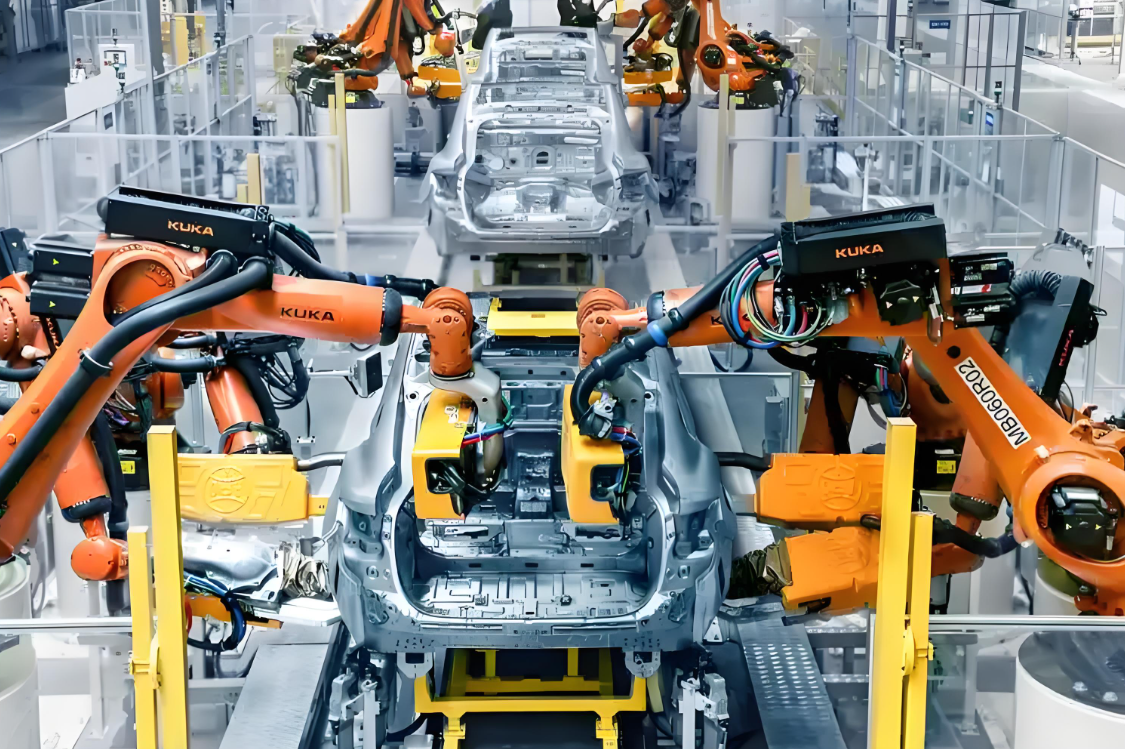
Robotics and Automation: Integration of robots and automated systems on the production line to handle repetitive, high-precision tasks such as welding, painting, assembly, and inspection.
Artificial Intelligence (AI) and Machine Learning (ML): AI and ML are used for predictive maintenance, quality control, and demand forecasting, enhancing decision-making and process optimization.
Internet of Things (IoT): IoT technology connects machines, tools, and systems in the manufacturing environment, enabling real-time monitoring and data collection for better decision-making and process control.
Collaborative Robots: Robots designed to work alongside humans to increase productivity, reduce human error, and enhance safety.
2. Material Innovation and Engineering
Lightweight Materials: Use of advanced materials such as composites, carbon fiber, aluminum, and high-strength steel to reduce vehicle weight and improve fuel efficiency, performance, and safety.
Sustainable and Recyclable Materials: Adoption of eco-friendly materials that are either recycled or easily recyclable, reducing the environmental footprint of automotive production.
Advanced Coatings and Surface Treatments: Development of new coatings for corrosion resistance, wear resistance, and improved aesthetics, leading to more durable and visually appealing vehicles.
3. Manufacturing Processes
Additive Manufacturing (3D Printing): Utilization of 3D printing for rapid prototyping, tooling, spare parts production, and even functional components, allowing for design flexibility and faster production cycles.
Advanced Welding and Joining Techniques: Implementation of advanced welding techniques like laser welding, ultrasonic welding, and friction stir welding to improve strength, precision, and efficiency in assembling complex vehicle parts.
Flexible Manufacturing Systems (FMS): The ability to produce a variety of vehicle models on the same production line by easily switching between different tasks and configurations.
CNC Machining: Computer Numerical Control (CNC) technology for high-precision cutting, shaping, and milling of vehicle components, ensuring tight tolerances and high-quality finishes.
4. Quality Control and Testing
Total Quality Management (TQM): A systematic approach to continuous improvement, ensuring that every part of the production process is optimized for quality.
Real-Time Data Analytics: Advanced sensors and data analytics are used to monitor quality during the manufacturing process, allowing for early detection of defects and minimizing waste.
Automated Inspection Systems: Use of vision systems, laser scanners, and other automated inspection technologies to check for quality and accuracy in parts and assemblies, reducing human error and improving product consistency.
Non-Destructive Testing (NDT): Techniques such as ultrasonic testing, X-ray inspection, and magnetic particle inspection are used to identify defects in materials and parts without causing damage.
5. Supply Chain and Logistics Optimization
Just-in-Time (JIT) Manufacturing: A lean manufacturing method that reduces inventory costs and ensures that parts are delivered to the production line only when needed, enhancing efficiency and reducing waste.
Advanced Logistics and Automation: The use of automated systems and machines, such as Automated Guided Vehicles (AGVs) and drones, to transport parts and materials within the factory, speeding up production and reducing human labor.
Blockchain for Supply Chain Transparency: Blockchain technology is increasingly used to track the origin and authenticity of materials, reducing the risk of counterfeit parts and enhancing the transparency of the supply chain.
Global Sourcing and Localization: Optimizing the supply chain through global sourcing strategies and local production capabilities to balance cost efficiency with the need for timely production.
6. Environmental Sustainability and Efficiency
Eco-Friendly Manufacturing: Implementation of energy-efficient processes, the use of renewable energy, and waste reduction practices to minimize the carbon footprint of the manufacturing process.
Recycling and Circular Economy: Designing vehicles and production processes with recycling in mind, enabling the reuse of materials and parts to reduce waste and support sustainability.
Electric Vehicle (EV) Production: The adoption of processes tailored for the production of electric vehicles, including the manufacturing of electric powertrains, batteries, and lightweight materials to enhance efficiency and reduce emissions.
Water and Energy Management: Optimization of water and energy usage in production, including the implementation of energy-efficient lighting, heating systems, and water recycling technologies.
7. Product Innovation and Customization
Mass Customization: Advances in manufacturing technology allow customers to personalize vehicles at scale, selecting colors, features, and configurations to meet individual preferences without compromising production efficiency.
Advanced Driver Assistance Systems (ADAS): Integration of ADAS technologies, including radar, sensors, cameras, and autonomous driving capabilities, which require sophisticated manufacturing and assembly processes.
Vehicle Connectivity: Embedding advanced connectivity features like 5G, infotainment systems, and V2X (vehicle-to-everything) communication technologies into vehicles, enhancing user experience and safety.
8. Workforce and Human-Centric Improvements
Human-Robot Collaboration: Employing collaborative robots to assist human workers in performing tasks that require precision and strength, enhancing productivity and safety while reducing worker fatigue.
Employee Training and Augmented Reality (AR): Using AR for training workers in complex assembly processes, enabling real-time feedback and improved skills development.
Safety and Ergonomics: Advances in workplace ergonomics, safety protocols, and the use of wearable devices to monitor worker health and well-being during the manufacturing process.
9. Digitization and Industry 4.0
Smart Manufacturing: The integration of sensors, cloud computing, and real-time data analytics into the production environment to monitor and optimize operations continuously, leading to greater efficiency and reduced downtime.
Digital Twins: The use of virtual representations of physical assets (digital twins) to simulate, monitor, and optimize the production process without the need for physical prototypes, improving speed and accuracy.
Artificial Intelligence (AI) in Production: AI-driven systems that enhance production scheduling, supply chain management, and quality control, allowing for more intelligent decision-making and optimization across the entire manufacturing process.
10. Cost Management and Efficiency
Lean Manufacturing: Streamlining production processes by eliminating waste, optimizing workflows, and continuously improving efficiency to reduce production costs while maintaining high-quality standards.
Cost-effective Production Systems: Use of advanced machinery and production methods, such as additive manufacturing or advanced robotics, to reduce labor costs, improve precision, and minimize the need for costly rework.
Improvements in automotive manufacturing can be grouped into several categories, each focusing on a specific aspect of the production process. These categories help manufacturers optimize efficiency, reduce costs, improve quality, and innovate within the industry. Below are the main categories of improvements in automotive manufacturing:
1. Technology and Automation
Robotics and Automation: Integration of robots and automated systems on the production line to handle repetitive, high-precision tasks such as welding, painting, assembly, and inspection.
Artificial Intelligence (AI) and Machine Learning (ML): AI and ML are used for predictive maintenance, quality control, and demand forecasting, enhancing decision-making and process optimization.
Internet of Things (IoT): IoT technology connects machines, tools, and systems in the manufacturing environment, enabling real-time monitoring and data collection for better decision-making and process control.
Collaborative Robots: Robots designed to work alongside humans to increase productivity, reduce human error, and enhance safety.
2. Material Innovation and Engineering
Lightweight Materials: Use of advanced materials such as composites, carbon fiber, aluminum, and high-strength steel to reduce vehicle weight and improve fuel efficiency, performance, and safety.
Sustainable and Recyclable Materials: Adoption of eco-friendly materials that are either recycled or easily recyclable, reducing the environmental footprint of automotive production.
Advanced Coatings and Surface Treatments: Development of new coatings for corrosion resistance, wear resistance, and improved aesthetics, leading to more durable and visually appealing vehicles.
3. Manufacturing Processes
Additive Manufacturing (3D Printing): Utilization of 3D printing for rapid prototyping, tooling, spare parts production, and even functional components, allowing for design flexibility and faster production cycles.
Advanced Welding and Joining Techniques: Implementation of advanced welding techniques like laser welding, ultrasonic welding, and friction stir welding to improve strength, precision, and efficiency in assembling complex vehicle parts.
Flexible Manufacturing Systems (FMS): The ability to produce a variety of vehicle models on the same production line by easily switching between different tasks and configurations.
CNC Machining: Computer Numerical Control (CNC) technology for high-precision cutting, shaping, and milling of vehicle components, ensuring tight tolerances and high-quality finishes.
4. Quality Control and Testing
Total Quality Management (TQM): A systematic approach to continuous improvement, ensuring that every part of the production process is optimized for quality.
Real-Time Data Analytics: Advanced sensors and data analytics are used to monitor quality during the manufacturing process, allowing for early detection of defects and minimizing waste.
Automated Inspection Systems: Use of vision systems, laser scanners, and other automated inspection technologies to check for quality and accuracy in parts and assemblies, reducing human error and improving product consistency.
Non-Destructive Testing (NDT): Techniques such as ultrasonic testing, X-ray inspection, and magnetic particle inspection are used to identify defects in materials and parts without causing damage.
5. Supply Chain and Logistics Optimization
Just-in-Time (JIT) Manufacturing: A lean manufacturing method that reduces inventory costs and ensures that parts are delivered to the production line only when needed, enhancing efficiency and reducing waste.
Advanced Logistics and Automation: The use of automated systems and machines, such as Automated Guided Vehicles (AGVs) and drones, to transport parts and materials within the factory, speeding up production and reducing human labor.
Blockchain for Supply Chain Transparency: Blockchain technology is increasingly used to track the origin and authenticity of materials, reducing the risk of counterfeit parts and enhancing the transparency of the supply chain.
Global Sourcing and Localization: Optimizing the supply chain through global sourcing strategies and local production capabilities to balance cost efficiency with the need for timely production.
6. Environmental Sustainability and Efficiency
Eco-Friendly Manufacturing: Implementation of energy-efficient processes, the use of renewable energy, and waste reduction practices to minimize the carbon footprint of the manufacturing process.
Recycling and Circular Economy: Designing vehicles and production processes with recycling in mind, enabling the reuse of materials and parts to reduce waste and support sustainability.
Electric Vehicle (EV) Production: The adoption of processes tailored for the production of electric vehicles, including the manufacturing of electric powertrains, batteries, and lightweight materials to enhance efficiency and reduce emissions.
Water and Energy Management: Optimization of water and energy usage in production, including the implementation of energy-efficient lighting, heating systems, and water recycling technologies.
7. Product Innovation and Customization
Mass Customization: Advances in manufacturing technology allow customers to personalize vehicles at scale, selecting colors, features, and configurations to meet individual preferences without compromising production efficiency.
Advanced Driver Assistance Systems (ADAS): Integration of ADAS technologies, including radar, sensors, cameras, and autonomous driving capabilities, which require sophisticated manufacturing and assembly processes.
Vehicle Connectivity: Embedding advanced connectivity features like 5G, infotainment systems, and V2X (vehicle-to-everything) communication technologies into vehicles, enhancing user experience and safety.
8. Workforce and Human-Centric Improvements
Human-Robot Collaboration: Employing collaborative robots to assist human workers in performing tasks that require precision and strength, enhancing productivity and safety while reducing worker fatigue.
Employee Training and Augmented Reality (AR): Using AR for training workers in complex assembly processes, enabling real-time feedback and improved skills development.
Safety and Ergonomics: Advances in workplace ergonomics, safety protocols, and the use of wearable devices to monitor worker health and well-being during the manufacturing process.
9. Digitization and Industry 4.0
Smart Manufacturing: The integration of sensors, cloud computing, and real-time data analytics into the production environment to monitor and optimize operations continuously, leading to greater efficiency and reduced downtime.
Digital Twins: The use of virtual representations of physical assets (digital twins) to simulate, monitor, and optimize the production process without the need for physical prototypes, improving speed and accuracy.
Artificial Intelligence (AI) in Production: AI-driven systems that enhance production scheduling, supply chain management, and quality control, allowing for more intelligent decision-making and optimization across the entire manufacturing process.
10. Cost Management and Efficiency
Lean Manufacturing: Streamlining production processes by eliminating waste, optimizing workflows, and continuously improving efficiency to reduce production costs while maintaining high-quality standards.
Cost-effective Production Systems: Use of advanced machinery and production methods, such as additive manufacturing or advanced robotics, to reduce labor costs, improve precision, and minimize the need for costly rework.
[ Retract
]